Yaesu VX-8DR · Volume 4
Yaesu VX-8DR — Vol 4: Reference
Quad-band ham handheld with GPS, APRS, and submersible IPX7 chassis
4.1 Tips and tricks
Smart-beaconing is worth the configuration effort. The factory APRS defaults use fixed-interval beaconing, which works fine for stationary or slow-moving stations but creates real channel pollution in vehicle use. Switch to smart-beaconing (Menu → APRS → Beacon → Smart) and the radio cuts beacon count by 50-70% during typical mixed driving without losing positional resolution. The regional APRS digipeaters and the iGate operators who feed packets to the internet appreciate this more than they will ever say.
The 1.25 m (220 MHz) RX-only is genuinely useful. The band is sparsely populated in most regions, but where there are active repeaters (Detroit, Chicago, the I-5 corridor on the West Coast), the QSOs are friendly and the noise floor is low because non-amateur activity on the band is minimal. Pre-load the local 220 MHz repeater output frequencies into a dedicated bank (“220 mon”) and scan it alongside the 2 m and 70 cm banks. The radio cannot TX on 1.25 m as shipped (Part 97 type-acceptance), so this is a listen-only enhancement — but it costs nothing in TX capability and adds an entire band of low-traffic conversation to monitor.
The hidden alignment menu exists — do not enter it casually. Holding Set + Mode + Power simultaneously during the boot sequence enters the factory alignment menu, which exposes reference oscillator trim values, PA bias trim, and a number of other parameters that should never be touched without proper alignment equipment (a calibrated signal generator, a frequency counter to ~0.1 ppm precision, and a service-quality wattmeter). Changing values in this menu by feel will de-tune the radio in ways that are visible immediately (the frequency drifts off-channel) or visible only after the fact (the PA runs hot and shortens its life). Yaesu service centers will re-align a unit that has been blindly adjusted, but they charge for it and the turnaround is weeks. The combination is documented in service-manual leaks online (search “VX-8DR service mode”) but the operational rule is: do not enter unless you are diagnosing a known fault with proper test equipment, and even then, do not change any values without a known-good reference.
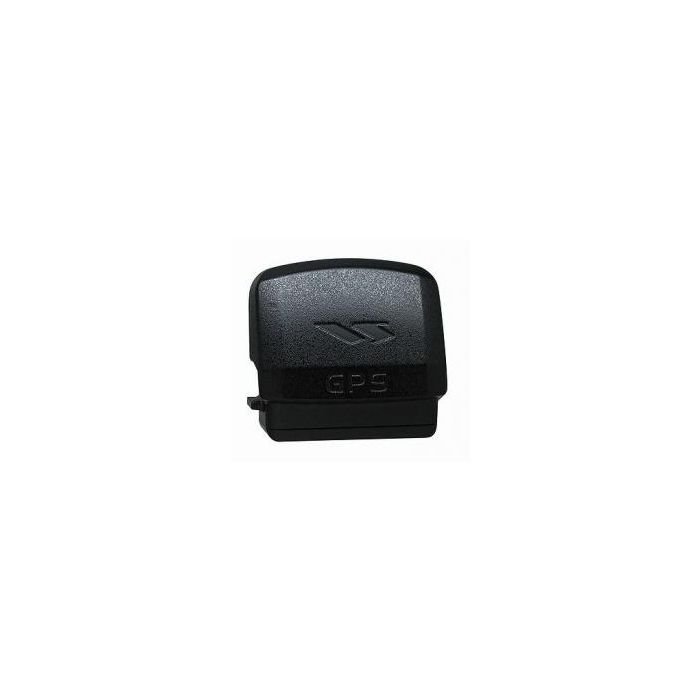
GPS sensitivity drops indoors. The FGPS-2’s patch antenna is small and the radio body is metal — combined, this gives the GPS receiver a partial-sky view at best when indoors. Lock indoors near a window is achievable but slow (2-5 minutes); lock indoors away from windows is generally impossible. For a trip that starts indoors, power up and acquire lock outdoors before stepping inside; the GPS will hold lock indoors once acquired (sometimes for 10-15 minutes) before losing it. For a deeper indoor environment (basement, parking garage), accept that the GPS will not lock and either fall back to manual position entry or accept that beacons will be off until the radio sees sky again.
Pre-load common APRS messages from the programming software. Composing an APRS message on the radio’s keypad is the kind of slow, error-prone, character-by-character multi-tap experience that 1995-era cell phones made famous. The programming software (CHIRP partially, RT Systems fully) lets you pre-load several common messages — “QRT going inside,” “QRX 10,” “Arrived at QTH,” “Need pickup” — into message slots that the radio can transmit with a few keypresses. This is the difference between APRS messaging being usable in the field and APRS messaging being theoretical.
Backup before every edit. Said in §5 but worth restating in the tips: clone the radio to an .img file before every editing session, even if you only plan to add one channel. The 30 seconds of friction has saved many operators a complete factory-reset-and-rebuild after a write was interrupted. Date-stamped filenames in the project’s programs/yaesu-vx8dr/ directory are the discipline.
4.2 Resources
Owner’s manual and service documentation. The canonical owner’s manual is at ../manuals/yaesu-vx8dr/VX-8DR_OM_ENG_EH029M152_V2.pdf (verify exact filename — TBD — confirm against the local copy in programs/). Yaesu’s product page for the VX-8DR is technically still live as a discontinued-product page; the URL has changed several times since the radio’s 2008 release and the current canonical URL is best found via a Yaesu site search for “VX-8DR.” The service manual is not officially distributed by Yaesu to end users but circulates on amateur-radio archive sites and includes the full alignment procedure, schematic, board-level diagnostics, and parts list — useful for self-repair work but legally grey to redistribute.
Community references.
- CHIRP wiki, Yaesu VX-8 page — https://chirpmyradio.com/projects/chirp/wiki/Yaesu_VX-8 — covers the driver’s capabilities, known limitations, and the cable / baud-rate configuration. The wiki page is updated as the driver evolves; check it before any major codeplug operation.
- eHam reviews — https://www.eham.net/reviews/view-product?id=7311 — long-running thread of operator reviews going back to 2008. Useful for failure-mode patterns (which symptoms tend to be hardware, which firmware, which user error) and for buying-used guidance.
- APRS.fi position-tracking site — https://aprs.fi — the universal “where is this callsign right now” web service for APRS, fed by iGates worldwide. Useful for verifying that your beacons are reaching the network after configuration changes.
- APRS group on groups.io — https://groups.io/g/aprs — the active modern home for APRS technical discussion, including VX-8-specific operational issues.
- RT Systems support and software — https://www.rtsystemsinc.com — vendor support, license transfers, and software updates for the RT Systems VX-8 Programmer.
Cross-references inside this series.
- Vol 1 (Overview) — the lineup map and decision graph.
- Vol 6 (Baofeng F8HP) and Vol 7 (Baofeng UV-B5) — the other owned analog VHF/UHF HTs; comparison context for “which HT do I grab” decisions.
- Vol 8 (AnyTone AT-D878UVII PLUS) — the DMR HT that complements the VX-8DR for digital voice operating.
- Vol 3 (Programming software landscape) — the cross-software view of CHIRP, RT Systems, AnyTone CPS, and the broader programming ecosystem.
- Vol 4 (Frequency planning & license envelope) — Part 97 framing across all the radios in the lineup, including the 1.25 m band, the 6 m band, and the cellular RX gap rules.
Cross-references to sibling deep dives in the hub.
- Antennas Vol 29 (Use-case Matrix) — per-radio antenna recommendations, the authoritative source for the VX-8DR’s antenna upgrade ladder.
- Antennas Vol 9 (Portable & mobile monopoles) — deep treatment of handheld-whip design, the SRH77CA / NA-771 family, telescoping whips for 6 m.
- Antennas Vol 31 (Regulatory & RF Safety) — Part 97 framing, MPE exposure for handheld TX at 5 W, the §1.1310 categorical-exclusion landscape post-2021.
- [Hack Tools comparison.md](../../../Hack Tools/_shared/comparison.md) — cross-tool decision matrix for the broader hardware-hacking and RF lineup.
Vendor and historical references.
- Yaesu (US distributor: Yaesu USA, Cypress CA) — https://www.yaesu.com
- Diamond Antenna (USA distributor: RT Systems is one of several) — for the SRH77CA and the broader Diamond catalog
- The original VX-8DR product-announcement archive on QRZ.com forums from 2008 — useful for historical context on what the radio was positioned against at launch (Icom IC-92AD, Kenwood TH-F6A)
Comments (0)