Midland WR120 · Volume 1
Midland WR120 — Vol 1: Introduction & Hardware
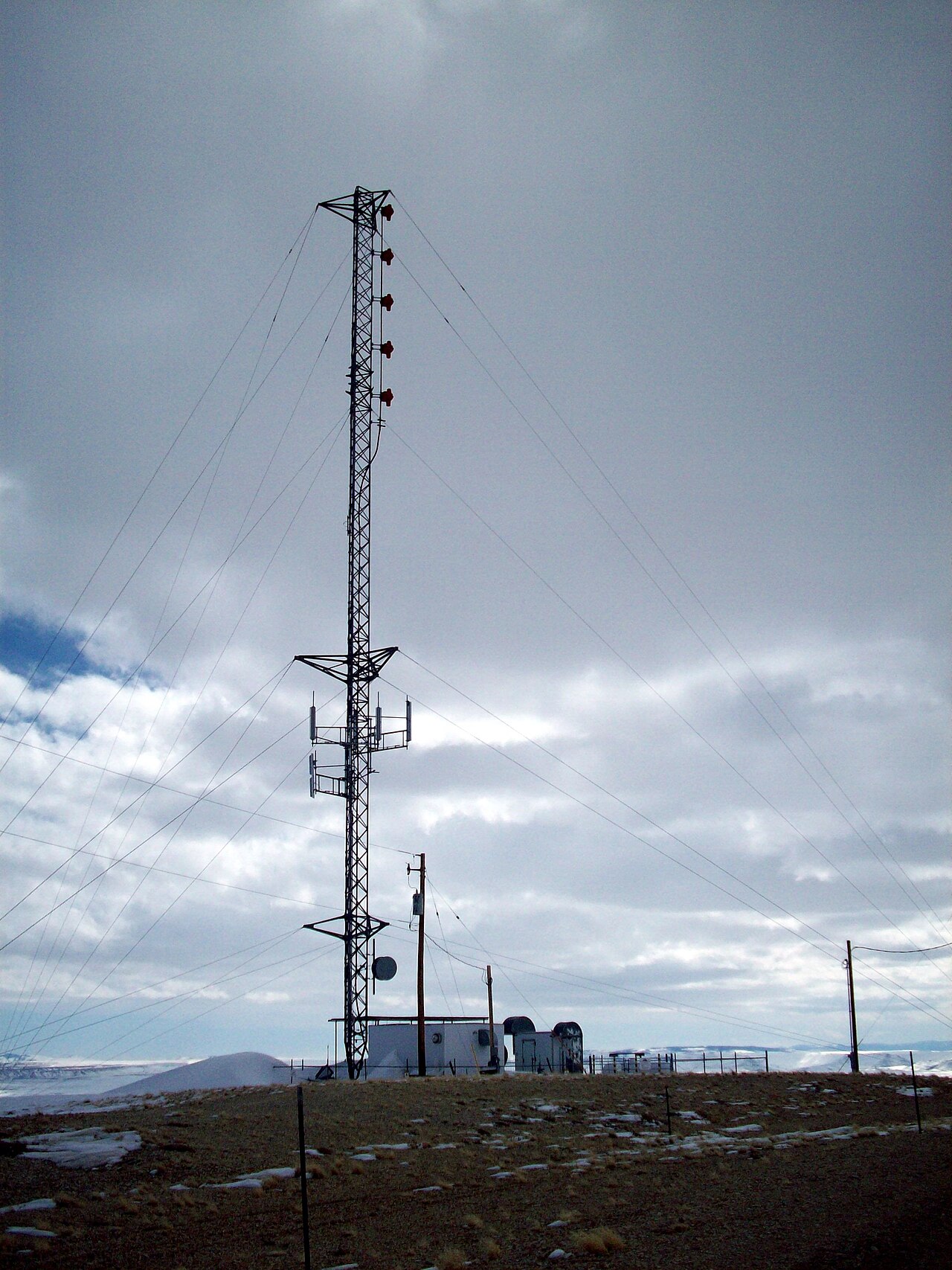
NOAA WX radio with Specific Area Message Encoding alerting
1.1 About this volume
The Midland WR120 is the dedicated NOAA weather-alert receiver in the lineup — the only device on the bench whose single job is to sit silent for weeks and then yell when a tornado warning, severe thunderstorm warning, or flash-flood warning is broadcast for the configured county FIPS code. It operates exclusively on the seven NOAA Weather Radio All Hazards (NWR) channels in the 162.400–162.550 MHz VHF band, and it implements S.A.M.E. (Specific Area Message Encoding) — the FIPS-coded protocol that lets the receiver ignore alerts targeted at other counties and trigger only on the ones that matter for the local geography.
Why this earns the bench slot when the SDS200 (Vol 14) ↗ and SDS100 (Vol 13) ↗ can both tune 162 MHz NWR perfectly well: unattended operation. A scanner parked on a NWR channel works only if you’re listening; the WR120 is the always-on appliance that wakes the household at 2 AM and stays silent for every other county’s warnings the rest of the time. The S.A.M.E. selectivity is the load-bearing feature. A non-S.A.M.E. weather radio beeps on every alert in the regional transmitter’s coverage footprint, which over a multi-county footprint trains the household to ignore the alarm. The WR120’s silence-until-relevant behavior is what makes it actually get listened to when it does sound.
Why this over a smart-home weather-alert service: latency and dependency. The WR120 hears the alert ~3–5 seconds after NWS transmits, on a path of NWS-transmitter → 162 MHz RF → onboard S.A.M.E. decoder → audio. The app-push path is NWS → NOAA Weather Wire / IPAWS → CAP feed → vendor infrastructure → cellular tower → phone → notification queue → audio; that’s 30–120 seconds in the median case and fails completely during regional cellular outages — which are correlated with the weather events you most want to be alerted about. The WR120’s only dependency is mains, with AA-battery backup that survives the 4–8 hour outage typical of a severe-storm-induced grid disturbance.
The WR120 is Public Alert®-certified — it meets the NWS/CEA-2009-B standard for S.A.M.E. decoding, event-code filtering, alert-tone audibility, and tamper-resistant programming. Most generic hardware-store NOAA radios are not certified and may be S.A.M.E.-capable only nominally; the WR120 is the entry-level certified device in Midland’s catalogue and one of the units NWS cites in its recommended-equipment list at https://www.weather.gov/nwr/info. For the regulatory and frequency-planning context see Vol 4; for the antenna upgrade path see §6 and the dipole build in Antennas Vol 6.
1.2 Hardware tour
The WR120 is a desktop appliance, not a handheld. Roughly 6.5 × 5 × 1.5 inches, ~1 lb with batteries installed, plastic case, intended to live permanently on a nightstand, kitchen counter, or shack desk.
1.2.1 The seven NWR channels
Fixed-tuned, channelized superheterodyne with the seven NWR frequencies baked in as presets WX1 through WX7:
Table 1 — Fixed-tuned, channelized superheterodyne with the seven NWR frequencies baked in as presets WX1 through WX7
| Preset | Frequency (MHz) | Preset | Frequency (MHz) |
|---|---|---|---|
| WX1 | 162.400 | WX5 | 162.500 |
| WX2 | 162.425 | WX6 | 162.525 |
| WX3 | 162.450 | WX7 | 162.550 |
| WX4 | 162.475 |
There is no general-coverage tuning. 25 kHz channel spacing, narrow-band FM at ±5 kHz deviation; each NWS transmitter site runs 300 W to 1 kW ERP, with the network built out to ~1,070 sites nationally covering ~95% of the US population. At any given location typically one to three of the seven channels carry receivable signal; the others are quiet because no nearby transmitter uses them. The on-radio “Weather Scan” walks all seven and stops on the strongest, which is how you find the right channel at initial setup.
1.2.2 Power: mains plus AA backup
- AC adapter: included wall-wart, 9 V DC, ~200 mA (TBD — verify exact spec against the actual unit’s adapter label; Midland’s spec sheet calls out “AC adapter included” without a clean datasheet number).
- Battery backup: 4× AA, alkaline or lithium primary. (The scaffold notes “3× AA” — verify against the actual unit; the WR120 manual specifies 4 cells, and a 4-cell pack gives a clean 6 V nominal that the radio’s internal regulator drops to its 3.3 V logic rail with reasonable headroom.) Battery life on standby (radio quiet, occasional S.A.M.E. polling) is in the months range; in active alert mode (siren sounding, voice broadcasting) it’s hours, so during an extended outage the backup keeps the alerter running through at least the duration of the immediate weather event but is not a multi-day solution.
The AA backup is the load-bearing redundancy here. The exact time you need the weather radio most — during a severe storm that may take down local power — is the time mains is most likely to fail. Without battery backup, the WR120 would go dark right when the tornado warning matters.
1.2.3 Front panel: display, LEDs, controls
A 4-line segment LCD shows current channel, time, FIPS receipt status, event code on alert, and menu state during programming (backlight on button press, auto-off in standby). Three-color hazard LEDs light up by severity when a S.A.M.E. message is decoded: RED for Warnings (Tornado, Severe Thunderstorm, Flash Flood, Hurricane — life-threatening, immediate action), ORANGE/amber for Watches (conditions favorable; be prepared), YELLOW for Statements / Advisories (informational). The color-coded LED is useful at a glance from across a darkened bedroom — you wake to the siren, look at the radio, and the LED tells you “warning” vs “watch” before you’ve parsed any LCD text.
Controls: Volume, Snooze, Weather, Menu, Select, Cancel — standard appliance-radio layout. The Snooze button silences an active alert for 5 minutes so the voice broadcast can complete without continuous siren over it.
1.2.4 Antenna
The stock antenna is a telescoping whip that extends to ~14 inches (~35 cm), top-mounted on the back of the chassis. At 162 MHz, a quarter-wave is ~46 cm and a half-wave is ~93 cm — the stock 35 cm whip is slightly shorter than a quarter-wave, which compromises gain by ~1–2 dB but is mechanically reasonable for a desktop unit. For most home installations within 30 miles of a NWR transmitter, the stock whip is more than adequate.
The back of the chassis includes an external antenna jack (3.5 mm mono — not a coax connector; this is the appliance-radio convention, not the ham convention). Connecting an outdoor 162 MHz dipole or a 1/4-wave ground-plane via a 3.5 mm pigtail with a coax adapter is the upgrade path for marginal signal locations (basement, RFI-heavy urban core, behind a hill from the nearest NWR transmitter). See §6 (Field use) for the upgrade discussion.
1.2.5 What’s missing
No CAT control, no serial, no USB — configuration is on-panel only. No SD card, no logging — past alerts are not retained beyond the on-screen scroll during the broadcast. No multiple-radio sync (master / slave deployments for whole-house coverage use independent units instead). No CAP / IPAWS over IP fallback — radio is RF-only, so a local NWR transmitter outage during maintenance has no internet path. These omissions are intentional. The WR120 is a $35–45 (mid-2026) appliance, not a network-attached emergency-management platform; the simplicity is the feature.
Comments (0)